
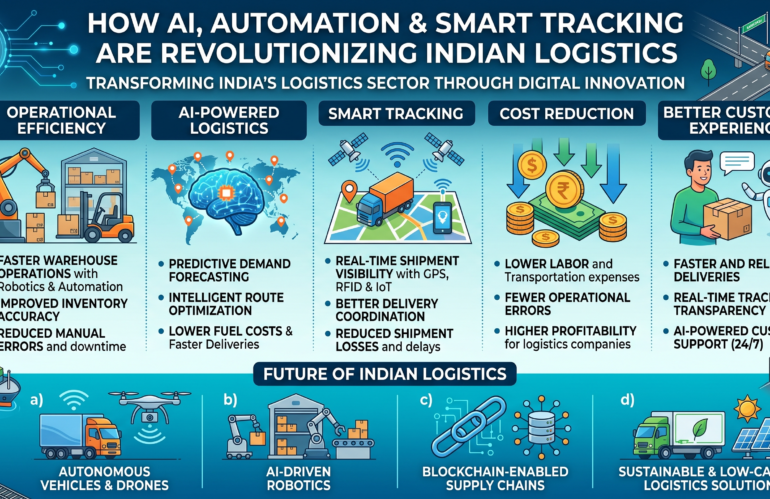
India’s logistics sector is undergoing a massive digital transformation, powered by artificial intelligence (AI), automation, and smart tracking technologies. As supply chains become more complex and customer expectations continue to rise, logistics companies are increasingly adopting advanced technologies to improve efficiency, reduce costs, and deliver better customer experiences.
AI-driven systems, automated operations, and real-time tracking solutions are helping logistics providers optimize routes, manage warehouses efficiently, improve inventory control, and ensure timely deliveries. These innovations are not only modernizing traditional logistics operations but also strengthening India’s position as a global supply chain hub.
With the rapid growth of e-commerce, manufacturing, retail, and cross-border trade, technology-driven logistics solutions have become essential for businesses aiming to stay competitive in today’s fast-paced market.

Enhancing Operational Efficiency Through Automation
Automation has emerged as one of the most impactful technologies in Indian logistics. By replacing repetitive manual processes with automated systems, logistics companies can significantly improve operational productivity and accuracy.
Automated Warehouse Management
Modern warehouses now use robotics, automated guided vehicles (AGVs), and smart conveyor systems to handle sorting, packaging, and inventory movement. These systems reduce dependency on manual labor while improving speed and minimizing errors.
Automated warehouse operations help businesses:
- Increase order processing speed
- Reduce operational downtime
- Improve inventory accuracy
- Enhance workforce productivity
- Lower labor-related costs
Faster Order Fulfillment
Automation also streamlines order fulfillment by enabling quick picking, packing, and dispatch processes. As a result, businesses can meet growing consumer demands for same-day and next-day deliveries.
In India’s booming e-commerce ecosystem, faster fulfillment has become a major competitive advantage for logistics providers.
The Role of AI in Indian Logistics
Artificial intelligence is transforming logistics by enabling smarter, data-driven decision-making. AI systems can analyze large volumes of data in real time, helping companies optimize operations and improve supply chain visibility.
Predictive Analytics and Demand Forecasting
AI-powered predictive analytics helps logistics companies forecast customer demand more accurately. By studying historical trends, seasonal patterns, and market behavior, businesses can:
- Maintain optimal inventory levels
- Reduce stock shortages
- Avoid overstocking
- Improve warehouse utilization
Accurate forecasting ultimately leads to lower operational costs and better customer satisfaction.
Intelligent Route Optimization
AI also improves transportation efficiency through intelligent route planning. By analyzing traffic conditions, fuel usage, weather patterns, and delivery schedules, AI systems identify the most efficient delivery routes.
Benefits include:
- Reduced fuel consumption
- Faster deliveries
- Lower transportation costs
- Improved fleet management
- Reduced carbon emissions
For Indian logistics companies dealing with urban congestion and long-distance transportation challenges, route optimization is becoming increasingly important.
Smart Tracking and Real-Time Supply Chain Visibility
Smart tracking technologies such as GPS, RFID, and IoT-enabled devices are revolutionizing shipment monitoring in Indian logistics.
Real-Time Shipment Tracking
Modern tracking systems provide businesses and customers with real-time visibility into shipment locations and delivery status. This transparency helps companies proactively manage delays and disruptions.
Key advantages include:
- Improved shipment accuracy
- Better delivery coordination
- Enhanced customer trust
- Reduced risk of lost shipments
- Faster issue resolution
IoT-Enabled Logistics Monitoring
IoT devices can monitor shipment conditions such as temperature, humidity, and handling during transportation. This is especially beneficial for industries like pharmaceuticals, food delivery, and cold chain logistics.
By continuously monitoring goods in transit, businesses can reduce spoilage, improve product safety, and maintain quality standards.
Cost Reduction and Higher Profitability
The integration of AI, automation, and smart tracking technologies helps logistics companies reduce operational costs while improving profitability.
Lower Labor Costs
Automation minimizes the need for manual intervention in repetitive tasks such as inventory updates, sorting, and dispatch management. This allows businesses to allocate human resources more effectively.
Reduced Fuel and Transportation Expenses
AI-based route optimization significantly cuts fuel consumption and improves fleet utilization. Logistics companies can complete more deliveries in less time while reducing transportation expenses.
Minimizing Operational Errors
Smart tracking and automated systems reduce human errors related to inventory management, shipment handling, and delivery scheduling. Fewer errors mean fewer financial losses and improved operational reliability.
Improving Customer Experience in Logistics
Customer expectations in India’s logistics market have evolved rapidly, especially with the rise of online shopping and instant deliveries. AI and smart technologies are helping logistics providers deliver better customer experiences.
Faster and More Reliable Deliveries
Automation and AI-powered logistics systems enable faster order processing and accurate delivery timelines. Customers benefit from reliable shipping and reduced waiting times.
Enhanced Transparency
Real-time tracking allows customers to monitor shipments throughout the delivery process. This transparency builds trust and improves customer satisfaction.
AI-Powered Customer Support
Many logistics companies now use AI chatbots and virtual assistants to handle customer queries, shipment tracking requests, and support services 24/7.
This improves response times while reducing the burden on customer service teams.
Challenges in Implementing AI and Automation in Logistics
Despite the numerous benefits, implementing advanced technologies in Indian logistics also comes with certain challenges.
High Initial Investment
Adopting AI, robotics, and smart tracking systems requires significant investment in technology, infrastructure, and training.
Resistance to Change
Employees and management teams may resist automation due to concerns about job displacement or unfamiliarity with new technologies.
Need for Skilled Workforce
As logistics operations become more technology-driven, companies must invest in employee training and upskilling programs to manage advanced systems effectively.
Overcoming these challenges will be essential for long-term digital transformation in the logistics sector.
Future Trends in Indian Logistics
The future of Indian logistics will be increasingly shaped by emerging technologies and intelligent supply chain solutions.
Autonomous Vehicles and Drones
Self-driving delivery vehicles and drones are expected to revolutionize last-mile delivery by improving speed and reducing operational costs.
AI-Driven Robotics
Advanced robotics will continue transforming warehouse operations, enabling faster sorting, packaging, and inventory management.
Blockchain and Smart Contracts
Blockchain technology can improve transparency, security, and trust across supply chains by enabling secure and tamper-proof transaction records.
Sustainable Logistics Solutions
AI-powered route optimization and electric delivery fleets will help companies reduce carbon emissions and support sustainable logistics practices.
Conclusion
AI, automation, and smart tracking technologies are reshaping the Indian logistics industry by improving efficiency, reducing costs, and enhancing customer experiences. From automated warehouses and predictive analytics to real-time shipment tracking, these innovations are helping logistics providers build smarter and more resilient supply chains.
As India’s logistics sector continues to grow, embracing digital transformation will no longer be optional. Businesses that invest in AI-driven logistics solutions today will be better positioned to achieve long-term growth, operational excellence, and competitive advantage in the future.
The road ahead for Indian logistics is undoubtedly technology-driven, and the adoption of intelligent systems will play a defining role in shaping the industry’s next phase of evolution.








[…] Shreyasweb Media Solutions notes that IoT devices can continuously monitor conditions such as temperature, humidity, shock, and tilt during transportation. For valuable furniture, electronics, artwork, or lab equipment, this is a game-changer. If a package is dropped or exposed to moisture, the sensor logs it. […]