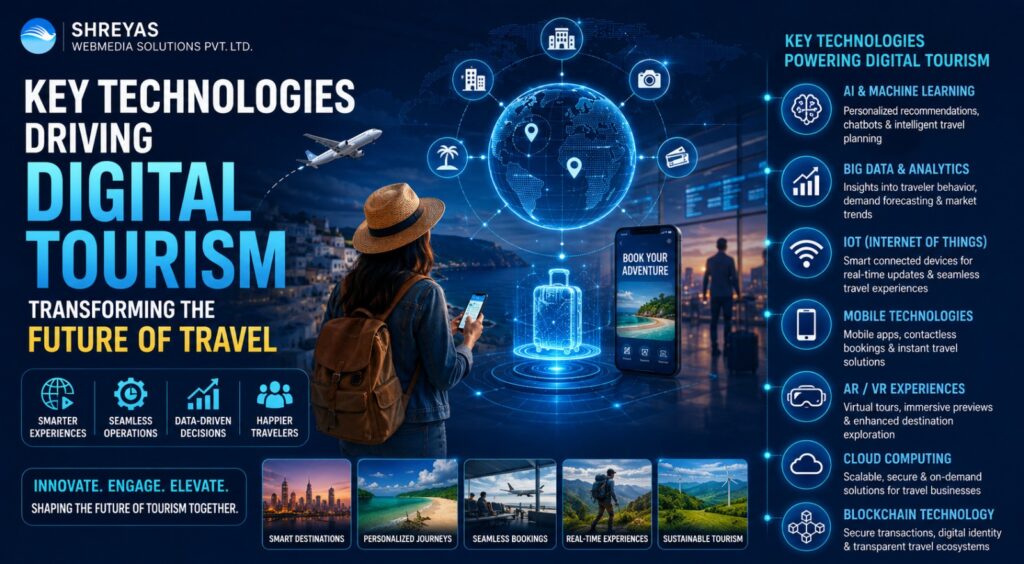
The tourism industry is undergoing a remarkable transformation fueled by technological innovation. Digital tourism has emerged as a powerful force, reshaping how travelers research destinations, book trips, explore attractions, and share experiences. From artificial intelligence and big data analytics to virtual reality and blockchain, technology is creating smarter, safer, and more personalized travel experiences.
As travelers increasingly rely on digital tools and connected devices, tourism businesses are adopting advanced technologies to meet evolving expectations. These innovations not only improve convenience but also enhance engagement, sustainability, and operational efficiency. Understanding the key technologies driving digital tourism is essential for businesses seeking to remain competitive in a rapidly changing landscape.
Artificial Intelligence Revolutionizing Travel Personalization
Artificial Intelligence (AI) is one of the most influential technologies transforming digital tourism. By analyzing vast amounts of traveler data, AI enables tourism providers to deliver highly personalized experiences tailored to individual preferences.
AI-powered recommendation engines can suggest destinations, accommodations, restaurants, and activities based on a traveler’s browsing history, interests, and previous trips. This level of customization improves customer satisfaction and helps travelers discover experiences that align with their preferences.
Additionally, AI-driven chatbots and virtual assistants provide instant customer support, answering questions, assisting with bookings, and offering travel recommendations around the clock. These intelligent systems streamline customer interactions while reducing operational costs for tourism businesses.
Predictive analytics powered by AI also helps companies anticipate traveler needs, allowing them to offer relevant services and promotions before customers even request them.
Big Data and Predictive Analytics Enhancing Decision-Making
Big data has become a valuable asset in the tourism industry, enabling organizations to better understand traveler behavior and market trends. By collecting and analyzing information from multiple sources, tourism businesses can gain actionable insights that drive strategic decisions.
Predictive analytics uses historical and real-time data to forecast travel patterns, seasonal demand, and emerging tourism destinations. These insights help businesses optimize pricing strategies, allocate resources effectively, and improve service delivery.
Tourism boards and travel companies also use data analytics to create targeted marketing campaigns. By understanding traveler demographics, interests, and booking behaviors, they can deliver personalized messages that increase engagement and conversion rates.
Furthermore, real-time analytics allows businesses to respond quickly to changing market conditions, enhancing customer experiences and operational efficiency.
Mobile Technology and Travel Apps Driving Convenience
Mobile technology has become an essential component of modern tourism. Smartphones and travel apps empower travelers to manage every aspect of their journey from a single device.
Travel applications enable users to:
- Book flights, hotels, and transportation
- Access digital boarding passes
- Receive real-time travel updates
- Discover local attractions and restaurants
- Navigate unfamiliar destinations using GPS
Popular travel apps provide seamless booking experiences, while navigation platforms help tourists explore new cities confidently. Mobile technology also facilitates contactless payments, mobile check-ins, and digital ticketing, improving convenience and reducing friction throughout the travel journey.
As mobile connectivity continues to improve globally, travel apps will remain central to the digital tourism ecosystem.
Virtual Reality and Augmented Reality Creating Immersive Experiences
Virtual Reality (VR) and Augmented Reality (AR) are redefining how travelers interact with destinations before and during their trips.
Virtual reality allows potential visitors to experience destinations through immersive digital tours. Travelers can explore hotels, museums, historical landmarks, and attractions from anywhere in the world before making booking decisions. These virtual experiences increase traveler confidence and inspire future visits.
Augmented reality enhances real-world experiences by overlaying digital information onto physical environments. Tourists can use smartphones or smart glasses to access historical facts, interactive maps, language translations, and cultural insights while exploring destinations.
Museums, heritage sites, and tourism attractions increasingly use AR and VR technologies to create engaging experiences that blend education with entertainment, enriching the overall visitor journey.
Blockchain Technology Improving Security and Transparency
Blockchain technology is gaining traction in the tourism sector due to its ability to enhance security, transparency, and trust.
As a decentralized digital ledger, blockchain securely records transactions, making them tamper-resistant and highly reliable. In tourism, blockchain can simplify booking processes, reduce fraud risks, and facilitate secure digital payments.
Key benefits of blockchain in tourism include:
- Secure traveler identity verification
- Transparent booking transactions
- Reduced dependency on intermediaries
- Enhanced customer trust
- Faster payment processing
Blockchain also supports loyalty programs by enabling secure and transferable reward systems. As digital transactions become increasingly important, blockchain is expected to play a larger role in the future of travel technology.
Social Media Influencing Travel Decisions
Social media platforms have become powerful marketing channels that significantly influence travel choices. Platforms such as Instagram, YouTube, TikTok, and Facebook inspire travelers by showcasing destinations through photos, videos, and user-generated content.
Travelers increasingly trust authentic experiences shared by fellow tourists and influencers. User-generated content often serves as a digital word-of-mouth recommendation, encouraging others to visit featured destinations.
Influencer marketing has become a major strategy for tourism brands seeking to increase visibility and engagement. Through compelling storytelling and visual content, influencers help destinations reach global audiences and shape traveler perceptions.
Social media also enables real-time interaction between tourism providers and travelers, creating stronger customer relationships and fostering brand loyalty.
Sustainable Technologies Promoting Responsible Tourism
Sustainability has become a key focus within the tourism industry, and technology is playing a vital role in supporting environmentally responsible travel practices.
Eco-friendly innovations are helping tourism businesses reduce their environmental impact through:
Smart Transportation Solutions
Electric vehicles, ride-sharing platforms, and intelligent traffic management systems reduce emissions and improve transportation efficiency.
Energy-Efficient Accommodations
Hotels are adopting smart energy management systems, renewable energy sources, and water-saving technologies to minimize resource consumption.
Digital Waste Management
Smart waste monitoring systems help destinations manage waste more effectively and maintain cleaner tourist environments.
Carbon Footprint Tracking
Digital tools enable travelers and businesses to measure and offset carbon emissions, encouraging more sustainable travel decisions.
As environmental awareness continues to grow, sustainable tourism technologies will become increasingly important in shaping the future of the industry.
The Internet of Things (IoT) Enhancing Connected Travel
The Internet of Things (IoT) is creating smarter and more connected travel experiences. IoT devices collect and share real-time information, improving efficiency and convenience throughout the traveler journey.
Examples of IoT applications in tourism include:
- Smart hotel rooms with automated controls
- Connected luggage tracking systems
- Intelligent airport management solutions
- Smart tourism destinations with interactive services
By integrating connected devices into tourism infrastructure, destinations can provide seamless and personalized experiences while improving operational performance.
Future Trends Shaping Digital Tourism
As technology continues to evolve, digital tourism is expected to become even more innovative and traveler-centric. Emerging trends likely to shape the industry’s future include:
- AI-powered hyper-personalization
- Metaverse-based travel experiences
- Advanced biometric authentication
- Smart destination management systems
- Enhanced cybersecurity solutions
- Sustainable travel technology innovations
Businesses that embrace these advancements will be better positioned to meet traveler expectations and remain competitive in an increasingly digital marketplace.
Conclusion
Digital tourism is transforming the travel industry through groundbreaking technologies such as artificial intelligence, big data analytics, mobile applications, virtual reality, blockchain, IoT, and sustainable solutions. These innovations are enhancing traveler experiences, improving operational efficiency, and creating new opportunities for tourism businesses worldwide.
As digital transformation accelerates, organizations that invest in technology-driven strategies will be better equipped to deliver personalized, secure, and sustainable travel experiences. The future of tourism is undeniably digital, and the technologies driving this evolution will continue to redefine how people explore the world.
Successfully navigating this transformation requires a clear strategy, the right technology investments, and seamless implementation. As a consulting company, we help tourism businesses, hospitality providers, travel agencies, and destination management organizations identify the most effective digital solutions to meet their goals. From digital transformation roadmaps and AI adoption to data analytics, customer experience optimization, and sustainability initiatives, our experts provide end-to-end guidance to help organizations enhance efficiency, improve traveler engagement, and achieve long-term growth. By partnering with us, tourism businesses can confidently embrace innovation and build future-ready digital ecosystems that thrive in an increasingly connected world.