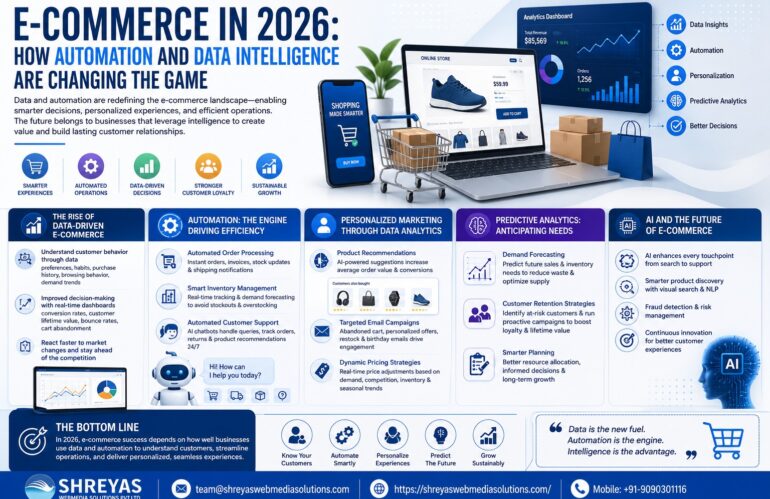
The e-commerce industry is undergoing a dramatic transformation powered by data analytics and automation technologies. What once depended heavily on manual processes and generalized marketing strategies has evolved into a highly intelligent, customer-centric digital ecosystem. Today, online businesses are leveraging real-time insights, artificial intelligence, predictive analytics, and automated workflows to enhance customer experiences, streamline operations, and drive sustainable growth.
As global competition intensifies, e-commerce brands are increasingly relying on data and automation not merely as operational tools but as strategic assets that determine long-term success. From personalized product recommendations to automated inventory management, these innovations are reshaping every aspect of online retail.
The Rise of Data-Driven E-Commerce
Data has become the backbone of modern e-commerce operations. Every customer interaction—whether browsing a product page, abandoning a cart, or completing a purchase—generates valuable information that businesses can analyze to make smarter decisions.
Understanding Customer Behavior
Through advanced analytics tools, e-commerce companies can gather insights into:
- Customer preferences
- Shopping habits
- Purchase history
- Browsing behavior
- Product demand trends
This information helps brands understand what consumers want and when they want it. Businesses can then tailor their offerings, pricing, and promotional campaigns accordingly.
For example, if analytics reveal that a particular demographic frequently purchases eco-friendly products, brands can create targeted campaigns promoting sustainable items to that audience segment.
Improved Decision-Making
Data-driven decision-making enables e-commerce businesses to reduce guesswork and optimize strategies with measurable outcomes. Key metrics such as conversion rates, customer lifetime value, bounce rates, and cart abandonment rates help businesses identify areas that need improvement.
Real-time dashboards and reporting systems allow companies to react quickly to market changes, helping them remain agile in a rapidly evolving digital marketplace.
Automation: The Engine Driving Operational Efficiency
Automation has become essential for e-commerce businesses looking to scale efficiently while minimizing operational costs. By automating repetitive tasks, companies can improve accuracy, reduce human error, and free up resources for strategic initiatives.
Automated Order Processing
One of the most impactful applications of automation is in order fulfillment. Automated systems can process orders instantly, update stock levels, generate invoices, and trigger shipping notifications without human intervention.
Benefits include:
- Faster order fulfillment
- Reduced processing errors
- Enhanced customer satisfaction
- Lower operational costs
Smart Inventory Management
Automated inventory management systems provide real-time visibility into stock levels and demand forecasting. These tools help businesses avoid stock shortages and overstocking issues by automatically reordering products when inventory reaches predefined thresholds.
This ensures smooth supply chain operations and improves overall profitability.
Automated Customer Support
AI-powered chatbots and virtual assistants are revolutionizing customer service in e-commerce. These tools can:
- Answer customer queries instantly
- Track orders
- Process returns
- Recommend products
- Provide 24/7 assistance
Automation in customer service not only improves response times but also enhances the overall shopping experience.
Personalized Marketing Through Data Analytics
Personalization has become a critical factor in customer engagement and retention. Consumers now expect brands to understand their needs and deliver relevant experiences.
Product Recommendations
Recommendation engines powered by artificial intelligence analyze user behavior and suggest products tailored to individual preferences. This strategy significantly increases average order values and improves conversion rates.
Popular examples include:
- “Customers also bought”
- “Recommended for you”
- Personalized homepage suggestions
These intelligent recommendations make shopping more convenient and engaging for consumers.
Targeted Email Campaigns
Marketing automation platforms allow businesses to send personalized emails based on customer behavior. Examples include:
- Abandoned cart reminders
- Personalized discount offers
- Product restock notifications
- Birthday promotions
Such campaigns improve engagement and encourage repeat purchases.
Dynamic Pricing Strategies
Using real-time market data, e-commerce businesses can implement dynamic pricing models that adjust prices based on:
- Demand fluctuations
- Competitor pricing
- Inventory levels
- Seasonal trends
Dynamic pricing helps businesses remain competitive while maximizing profitability.
Predictive Analytics: Anticipating Consumer Needs
Predictive analytics is transforming how e-commerce businesses forecast trends and plan future strategies. By analyzing historical and real-time data, businesses can anticipate customer demands before they arise.
Demand Forecasting
Predictive models help companies estimate future sales trends and inventory requirements. This minimizes waste, reduces storage costs, and improves operational efficiency.
For example, retailers can prepare for seasonal demand spikes during holidays or shopping festivals by stocking products in advance.
Customer Retention Strategies
Predictive analytics also helps identify customers who may stop engaging with a brand. Businesses can proactively launch retention campaigns by offering personalized incentives and loyalty rewards.
This proactive approach improves customer retention and lifetime value.
Artificial Intelligence and Machine Learning in E-Commerce
Artificial intelligence (AI) and machine learning (ML) are taking automation to the next level by enabling systems to learn and improve continuously.
AI-Powered Search and Recommendations
Modern e-commerce platforms use AI to deliver smarter search results and highly accurate product recommendations. These systems understand user intent and improve the shopping experience by showing the most relevant products.
Fraud Detection and Security
AI-driven fraud detection systems can analyze purchasing behavior patterns and flag suspicious activities in real time. This helps businesses reduce fraudulent transactions and protect customer data.
Visual Search Technology
Visual search tools allow users to upload images and find similar products instantly. This technology is especially popular in fashion and home décor e-commerce sectors.
Enhancing Supply Chain and Logistics
Automation and data analytics are also optimizing logistics and supply chain operations.
Real-Time Shipment Tracking
Customers now expect complete visibility into their orders. Automated tracking systems provide real-time updates, improving transparency and customer trust.
Warehouse Automation
Robotics and AI-powered warehouse systems help businesses:
- Sort products efficiently
- Manage storage space
- Accelerate packing and shipping
- Reduce labor costs
This results in faster deliveries and better operational performance.
Challenges of Data and Automation in E-Commerce
Despite the numerous benefits, implementing data and automation technologies also comes with challenges.
Data Privacy Concerns
As businesses collect vast amounts of customer data, maintaining privacy and security becomes increasingly important. Companies must comply with regulations such as GDPR and ensure secure data handling practices.
High Initial Investment
Advanced automation tools and AI technologies often require significant investment. Small and medium-sized businesses may face budget constraints when adopting these solutions.
Workforce Adaptation
Automation may alter traditional job roles, requiring employees to learn new digital skills. Businesses must invest in workforce training to ensure smooth technological transitions.
Future Trends in E-Commerce Automation
The future of e-commerce will be shaped by even more advanced technologies and smarter automation systems.
Voice Commerce
Voice assistants are becoming increasingly popular for online shopping. Consumers can now search for products and place orders using voice commands through smart devices.
Augmented Reality Shopping
AR technology allows customers to virtually try products before purchasing, enhancing confidence and reducing return rates.
Hyper-Personalization
Future e-commerce platforms will deliver even more personalized experiences using advanced AI algorithms and behavioral analytics.
Internet of Things (IoT)
Connected devices will enable automated replenishment systems, where products are reordered automatically based on usage patterns.
Conclusion
Data and automation are fundamentally reshaping the e-commerce industry. Businesses that embrace these technologies are gaining a competitive edge through improved efficiency, personalized customer experiences, and smarter decision-making.
As artificial intelligence, predictive analytics, and automation technologies continue to evolve, e-commerce companies must adapt quickly to remain relevant in an increasingly digital marketplace. The future belongs to businesses that can effectively harness the power of data and automation to create seamless, intelligent, and customer-focused shopping experiences.
For e-commerce brands aiming to thrive in 2026 and beyond, investing in data-driven strategies and automation is no longer optional—it is essential.