
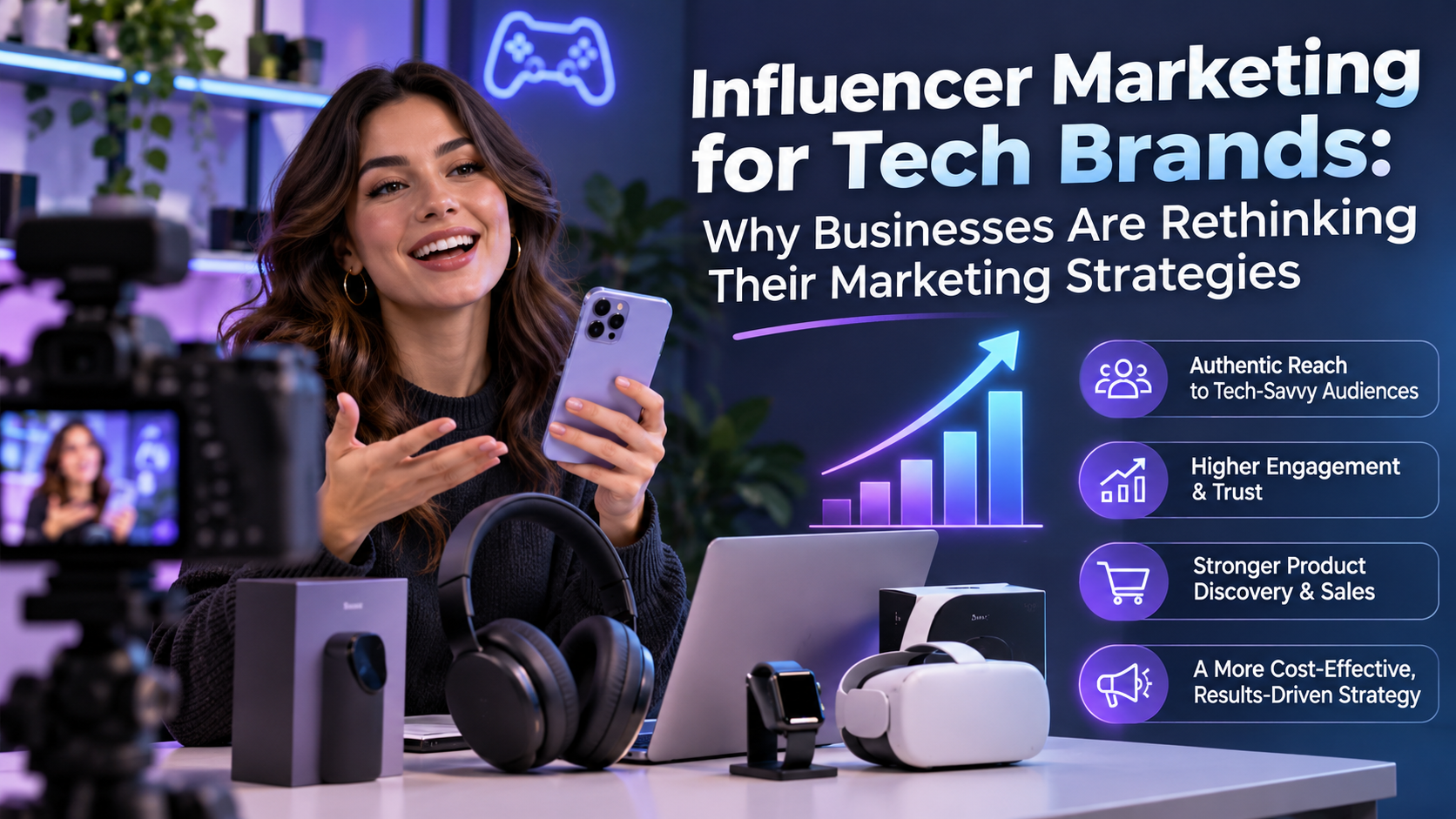
Nov 16: Technology companies are constantly looking for better ways to reach customers and explain the value of their products. Whether it is a new smartphone, an artificial intelligence application, cybersecurity software or an enterprise technology solution, potential buyers often want to understand how a product works before making a decision.
Traditional advertising can introduce a product, but it may not always answer the questions customers have. This is one reason influencer marketing is becoming increasingly important for technology brands.
Technology reviewers, software developers, industry professionals and content creators are helping companies communicate with audiences through product demonstrations, reviews and practical explanations. Instead of simply telling customers that a product is useful, creators can show how it works and where it fits into everyday life.
For technology businesses, this approach offers an opportunity to build stronger relationships with potential customers while making complex products easier to understand.
Why Influencer Marketing Is Gaining Importance in the Technology Industry
Technology purchases often involve considerable research. Customers compare specifications, read reviews, watch demonstrations and look for recommendations before choosing a product or service.
Influencers can play an important role during this process.
Product Reviews Help Customers Make Informed Decisions
A technology creator reviewing a smartphone, laptop or wearable device can explain its performance, features and limitations through actual use.
Similarly, a creator specialising in software can demonstrate how an application works and whether it offers practical benefits.
These experiences give audiences information that may be difficult to understand through conventional advertisements alone.
Industry Experts Can Build Greater Brand Credibility
Technology companies are also recognising the value of working with people who have genuine knowledge of their industries.
Cybersecurity professionals, software developers, AI specialists and technology consultants can explain products from a practical perspective.
This is particularly useful for businesses selling enterprise technology, where customers may need detailed information before investing in a solution.
Smaller Creators Can Reach More Relevant Audiences
A technology brand does not always need a celebrity influencer or someone with millions of followers.
Creators who regularly discuss artificial intelligence, gaming, software development, consumer electronics or cloud computing may have smaller but more relevant audiences.
For a company selling a specialised technology product, reaching the right audience can be more valuable than simply generating a large number of views.
Influencer Marketing Trends Shaping the Technology Industry in 2026
Influencer marketing is gradually moving beyond sponsored posts and product promotions. Brands are looking for creators who can contribute to product education, audience engagement and business growth.
According to Kofluence’s Decoding Influence: Annual Research Report 2026, India’s influencer marketing industry was estimated at ₹3,000–3,500 crore in 2025 and is projected to reach ₹4,500–5,000 crore by 2027.
The report also highlights the growing role of AI, professional creator partnerships and performance-based campaigns.
For technology companies, these developments present several opportunities.
AI Creators Are Helping Explain Emerging Technologies
Artificial intelligence has introduced products and services that many consumers and businesses are still learning to use.
Creators who specialise in AI tools, automation, machine learning and productivity applications can help explain these technologies through practical demonstrations.
For instance, an AI software company can collaborate with creators to demonstrate how its platform helps with research, workflow management or business operations.
This makes the product easier to understand while helping the company reach audiences interested in adopting new technology.
LinkedIn Is Creating Opportunities for B2B Influencer Marketing
Influencer marketing is no longer limited to platforms associated with entertainment and lifestyle content.
Professional networks are becoming useful for technology companies targeting business customers.
Startup founders, technology consultants, industry analysts and senior executives can share their experiences, discuss industry developments and explain how technology is changing business operations.
For SaaS providers, cloud computing companies and cybersecurity businesses, these collaborations can help establish industry credibility and generate relevant business enquiries.
Long-Term Creator Partnerships Are Becoming More Valuable
A single sponsored post may introduce a product, but it may not be enough to explain its full capabilities.
Technology products often require demonstrations, comparisons and repeated communication before customers become comfortable with them.
Long-term influencer partnerships allow creators to become familiar with a product and discuss its features through different types of content.
Kofluence’s 2026 research found that 62.1% of surveyed brands agreed or strongly agreed that long-term creator relationships deliver better returns than one-time campaigns.
Employee Advocacy Is Adding a Human Element to Technology Marketing
Technology companies can also involve their own employees in content creation.
Engineers, product managers, developers and cybersecurity specialists can share insights into their work and explain how particular solutions are developed or used.
This gives audiences an opportunity to hear directly from people who understand the technology, rather than relying entirely on promotional communication.
How Technology Companies Can Build an Effective Influencer Marketing Strategy
Choosing an influencer is only one part of a successful campaign. Technology companies need to consider their audience, product requirements and marketing objectives before entering into a collaboration.
1. Choose Influencers Who Understand the Product
The right creator should have an audience that matches the company’s target customers.
A smartphone manufacturer may benefit from working with gadget reviewers, while a cybersecurity company may find greater value in collaborating with industry professionals.
Brands should consider audience relevance, engagement quality, subject knowledge, content quality and previous collaborations before making a decision.
2. Focus on Demonstrations Rather Than Just Promotions
Technology products are often easier to understand when people can see them in action.
Instead of limiting campaigns to promotional messages, brands can collaborate with creators on tutorials, product walkthroughs, comparisons and real-world demonstrations.
An AI software company, for example, could show how its platform helps businesses automate routine tasks or improve productivity.
3. Explore Different Content Formats
Technology brands can experiment with several formats depending on their products and audiences.
- Product reviews can help introduce new devices.
- Tutorials can explain software features.
- Comparison videos can help customers evaluate alternatives.
- Podcasts can provide space for industry discussions.
- Webinars can support enterprise product education.
- LinkedIn articles can reach professional audiences.
- Short-form videos can introduce products to new users.
Using different formats also helps companies communicate with customers at various stages of their purchasing journey.
4. Give Creators Room to Share Genuine Experiences
Audiences are generally more interested in content that feels natural rather than heavily scripted.
Brands should provide creators with accurate product information and clear campaign guidelines while allowing them to communicate in their own style.
Honest product demonstrations and balanced reviews can help build stronger audience relationships over time.
5. Track More Than Social Media Engagement
Views, likes and comments can indicate how audiences respond to content, but they do not necessarily show whether a campaign is contributing to business growth.
Technology companies should also track website traffic, product enquiries, software trials, app downloads, demonstration registrations and qualified leads.
Campaign-specific landing pages and tracking links can help businesses understand which collaborations are generating meaningful results.
How Much Should Technology Startups Spend on Influencer Marketing?
For startups and emerging technology companies, influencer marketing does not necessarily require a large advertising budget. The amount depends on the product, target audience, creator’s expertise, content requirements and campaign duration.
Rather than spending heavily on a single popular creator, startups can consider a combination of smaller technology influencers who have relevant audiences.
A practical approach is to divide campaigns into three stages.
Initial testing: Start with a small group of niche creators to understand audience response, content performance and product interest.
Campaign expansion: Identify creators generating relevant engagement and enquiries, then expand collaborations with those who deliver stronger results.
Long-term partnerships: Work with selected creators on product demonstrations, educational content, webinars and recurring campaigns.
Businesses should also account for content production, product samples, usage rights, paid amplification and campaign tracking when calculating the overall budget.
The most important consideration is not the number of influencers engaged but whether the campaign reaches potential customers and contributes to the company’s marketing objectives.
Which Technology Sectors Can Benefit From Influencer Marketing?
Influencer marketing can support businesses across several technology segments.
Consumer Electronics
Smartphone manufacturers, laptop companies and wearable technology brands can collaborate with reviewers for product demonstrations, comparisons and hands-on reviews.
Artificial Intelligence and SaaS
AI and software companies can work with technology educators and productivity creators to explain practical applications and demonstrate their products.
Cybersecurity
Cybersecurity professionals can help explain online threats, data protection and the importance of enterprise security solutions.
Gaming Technology
Gaming creators can introduce new hardware, gaming accessories and technology developments through reviews and live demonstrations.
Cloud Computing and Enterprise Software
Developers, consultants and technology specialists can explain how cloud platforms and enterprise applications support business operations.
The Growing Business Opportunity in Technology Influencer Marketing
The growing investment in creator partnerships suggests that influencer marketing is becoming a more established part of business communication.
Nielsen’s 2026 Annual Marketing Report found that 64% of surveyed technology marketers had dedicated and growing budgets for creator and influencer marketing, compared with a global average of 58%.
For technology startups, these partnerships can provide an additional way to introduce new products and reach specialised audiences. Established companies can use them to support product launches, explain new features and strengthen their market presence.
India also offers opportunities for regional influencer campaigns. Brands can collaborate with creators producing content in Hindi, Tamil, Telugu, Kannada, Bengali and Malayalam to reach audiences beyond major metropolitan markets.
This can be particularly useful for technology companies targeting students, small businesses, entrepreneurs and consumers who prefer receiving product information in their regional languages.
Challenges Technology Brands Should Not Overlook
Despite its advantages, influencer marketing requires careful planning.
One common mistake is selecting creators based only on their follower count. A large audience does not necessarily mean that the creator can reach the right customers.
Technical accuracy is another important consideration. Incorrect claims about software performance, AI capabilities or cybersecurity features can affect a company’s credibility.
Brands should also establish clear ways to measure campaign results rather than relying entirely on social media engagement.
Advertising transparency is equally important. In India, the Advertising Standards Council of India (ASCI) requires influencers to disclose material connections with advertisers. Labels such as #Ad, #Sponsored and #Collaboration should be clearly displayed so that audiences can identify promotional content.
Technology companies should ensure that sponsored content follows applicable advertising guidelines and that product claims are supported by evidence.
The Future of Influencer Marketing for Technology Brands
As technology becomes part of almost every aspect of business and everyday life, the way companies explain their products is also changing.
Customers want to understand how a new AI application works, whether a software platform can solve a particular business problem or how a device performs outside a controlled demonstration.
This creates opportunities for creators who can combine technical knowledge with clear and relatable communication.
The role of B2B influencers is also likely to become more important. Enterprise technology companies can work with founders, consultants, developers and industry specialists to reach decision-makers who may not respond to conventional advertising.
Going forward, successful technology influencer marketing will depend less on follower numbers and more on audience relevance, subject expertise, authentic communication and measurable results.
Conclusion
Influencer marketing is creating new opportunities for technology companies to connect with customers and explain increasingly complex products. From smartphones and gaming devices to artificial intelligence, cybersecurity and enterprise software, creator partnerships can help brands make technology more accessible.
For businesses, the real value lies in finding people who understand their products and can communicate their benefits through genuine experiences.
As the creator economy continues to develop, technology companies that invest in meaningful partnerships and useful content will have more opportunities to build credibility, improve customer engagement and strengthen their digital presence.




Leave a Reply
You must be logged in to post a comment.