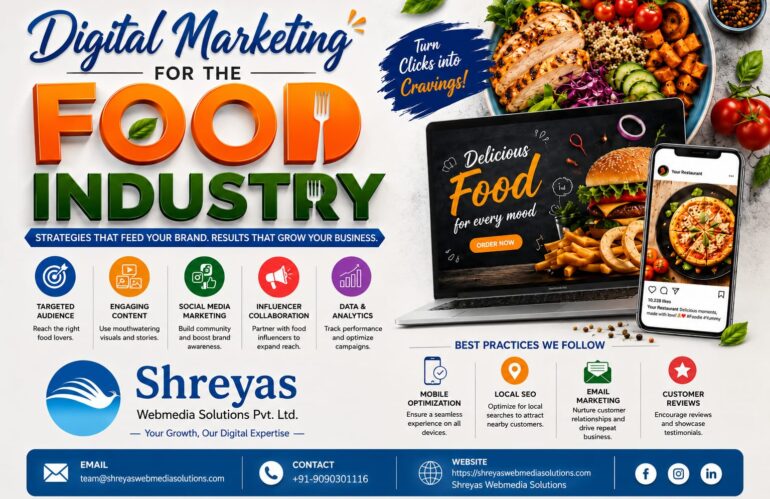
June 29: The food industry has undergone a remarkable digital transformation over the past decade. Whether it’s restaurants, cafés, cloud kitchens, bakeries, food delivery services, or packaged food brands, businesses are increasingly relying on digital marketing to attract customers, build brand loyalty, and increase sales.
Today’s consumers discover restaurants through Google searches, browse menus on Instagram, read online reviews before ordering, and often make purchasing decisions based on social media recommendations. As a result, having a strong digital presence is no longer optional—it’s essential.
This guide explores the most effective digital marketing strategies for food businesses, helping brands maximize their online visibility, engage customers, and stay competitive in an evolving marketplace.
Understanding Digital Marketing in the Food Industry
Digital marketing refers to promoting food products and services using online channels such as websites, search engines, social media platforms, email, and mobile applications.
Unlike traditional advertising, digital marketing enables food businesses to communicate directly with customers, personalize experiences, and measure campaign performance in real time.
The food industry is especially suited to digital marketing because purchasing decisions are often influenced by visual content, online reviews, and customer recommendations.
Key benefits include:
- Increased brand awareness
- Higher customer engagement
- Better local visibility
- Improved customer loyalty
- Higher online orders and reservations
- Cost-effective advertising
- Measurable marketing performance
Why Digital Marketing Matters for Food Businesses
Consumer behavior has shifted dramatically in recent years. Before visiting a restaurant or ordering food online, customers typically:
- Search on Google
- Check online reviews
- Browse social media pages
- View food photos
- Compare ratings
- Read customer testimonials
Without a strong online presence, even the best food businesses risk losing customers to competitors.
Digital marketing helps food brands:
- Reach local customers
- Build trust through reviews
- Showcase menu items visually
- Increase repeat business
- Generate online bookings
- Promote seasonal offers
Search Engine Optimization (SEO) for Food Businesses
Search Engine Optimization (SEO) is one of the most valuable long-term digital marketing investments for restaurants and food brands.
SEO improves visibility when customers search for:
- Best restaurants near me
- Healthy food delivery
- Vegan café
- Bakery in my city
- Catering services
- Homemade desserts
Essential SEO Best Practices
Optimize Local SEO
Most food businesses rely on local customers.
Focus on:
- Google Business Profile optimization
- Location-based keywords
- Customer reviews
- Local citations
- Mobile-friendly websites
Target High-Intent Keywords
Examples include:
- Best Italian restaurant
- Organic food delivery
- Vegan bakery
- Fine dining restaurant
- Healthy meal plans
- Pizza delivery near me
Create Valuable Content
Publishing helpful articles improves SEO while attracting potential customers.
Content ideas include:
- Healthy recipes
- Cooking tips
- Ingredient guides
- Seasonal menu updates
- Chef interviews
- Food pairing suggestions
Social Media Marketing for Food Brands
Social media has become the heart of food marketing.
Food is highly visual, making platforms like Instagram, Facebook, TikTok, Pinterest, and YouTube ideal for promoting culinary experiences.
Best Social Media Strategies
Showcase High-Quality Food Photography
Professional images encourage engagement and inspire customers to visit or order.
Focus on:
- Fresh ingredients
- Colorful dishes
- Beautiful plating
- Behind-the-scenes kitchen moments
Short Video Content
Short-form videos receive excellent engagement.
Ideas include:
- Recipe videos
- Food preparation
- Chef introductions
- Customer reactions
- Kitchen tours
- Daily specials
Engage Your Community
Interaction builds customer loyalty.
Respond to:
- Comments
- Reviews
- Messages
- Mentions
Host polls, quizzes, contests, and giveaways to encourage participation.
Content Marketing: Tell Your Brand Story
Today’s consumers appreciate authenticity.
Content marketing allows food businesses to educate, entertain, and connect emotionally with customers.
Effective content formats include:
- Blog posts
- Recipes
- Cooking tutorials
- Nutrition guides
- Ingredient spotlights
- Customer success stories
- Food trend articles
Storytelling helps customers understand:
- Your restaurant’s history
- The inspiration behind dishes
- Sustainable sourcing practices
- Chef expertise
- Community involvement
Great stories build lasting emotional connections.
Email Marketing for Customer Retention
Email marketing remains one of the highest ROI marketing channels.
Rather than focusing solely on promotions, successful food businesses use email to nurture customer relationships.
Ideas for email campaigns include:
- Weekly specials
- New menu launches
- Birthday discounts
- Loyalty rewards
- Exclusive recipes
- Event invitations
- Holiday offers
Personalized emails based on customer preferences significantly improve open rates and conversions.
Influencer Marketing for Food Brands
Food influencers have become powerful brand ambassadors.
Partnering with local food bloggers, chefs, nutrition experts, or lifestyle creators helps businesses reach highly engaged audiences.
Benefits include:
- Increased credibility
- Expanded reach
- Authentic recommendations
- Higher social engagement
- More website traffic
- Better brand awareness
Successful collaborations include:
- Restaurant reviews
- Recipe creation
- Product tastings
- Cooking challenges
- Live events
- Limited-time menu launches
Choose influencers whose audience aligns with your target market.
The Power of User-Generated Content
User-generated content (UGC) is among the most trusted forms of marketing.
Customers naturally share:
- Food photos
- Restaurant visits
- Reviews
- Videos
- Recommendations
- Social media stories
Encourage customers to:
- Tag your business
- Use branded hashtags
- Leave reviews
- Share dining experiences
Reposting customer content builds trust while reducing content creation costs.
Online Reviews and Reputation Management
Reviews strongly influence purchasing decisions in the food industry.
Positive reviews increase visibility while encouraging new customers.
Best practices include:
- Respond promptly to reviews
- Thank satisfied customers
- Address complaints professionally
- Encourage honest feedback
- Monitor review platforms regularly
Excellent customer service often turns negative experiences into positive ones.
Mobile Marketing and Food Delivery
Most food-related searches now occur on smartphones.
Food businesses should prioritize:
- Mobile-friendly websites
- Fast loading speed
- Easy online ordering
- Click-to-call buttons
- Mobile payment options
- QR code menus
Additionally, integrating with food delivery platforms expands customer reach and convenience.
Leveraging Analytics for Better Results
Data-driven marketing allows food businesses to optimize campaigns continuously.
Monitor important metrics such as:
- Website traffic
- Online reservations
- Conversion rates
- Social media engagement
- Customer acquisition cost
- Email open rates
- Repeat customer rate
- Return on advertising spend (ROAS)
Analytics help identify what works and where improvements are needed.
Emerging Trends in Food Digital Marketing
Sustainability Marketing
Consumers increasingly support environmentally responsible brands.
Highlight initiatives such as:
- Sustainable sourcing
- Eco-friendly packaging
- Food waste reduction
- Local ingredient partnerships
Health-Conscious Marketing
Demand for healthier food options continues to rise.
Promote:
- Organic ingredients
- Low-calorie meals
- Vegan options
- Gluten-free dishes
- Nutritional transparency
Artificial Intelligence
AI is transforming customer experiences through:
- Personalized recommendations
- Chatbots
- Automated customer support
- Predictive ordering
- Smart loyalty programs
Voice Search Optimization
Consumers increasingly search using voice assistants.
Optimize for conversational phrases like:
- Best pizza near me
- Healthy lunch nearby
- Family restaurant open now
Video-First Marketing
Short-form videos dominate consumer attention.
Popular formats include:
- Recipe demonstrations
- Kitchen tours
- Chef interviews
- Food styling
- Customer testimonials
- Live cooking sessions
Best Practices for Digital Marketing Success
To maximize results, food businesses should:
- Build a mobile-friendly website.
- Optimize for local SEO.
- Maintain consistent branding.
- Invest in professional food photography.
- Publish engaging blog content regularly.
- Leverage customer reviews.
- Use targeted email marketing.
- Collaborate with relevant food influencers.
- Monitor campaign performance through analytics.
- Stay updated with emerging digital trends.
Conclusion
Digital marketing has become one of the most powerful growth drivers for the food industry. From search engine optimization and social media marketing to influencer partnerships, email campaigns, and user-generated content, businesses have countless opportunities to strengthen their online presence and build lasting customer relationships.
As consumer preferences continue to evolve, food brands that embrace innovation, create engaging visual content, prioritize customer experiences, and make data-driven decisions will be best positioned for long-term success. By implementing these proven digital marketing strategies and staying ahead of emerging trends, restaurants, cafés, food manufacturers, and delivery services can attract more customers, increase brand loyalty, and achieve sustainable business growth in an increasingly competitive digital marketplace. As a digital marketing consulting company, we help food businesses develop customized marketing strategies, enhance their online visibility, and leverage the latest digital tools to drive measurable business success.