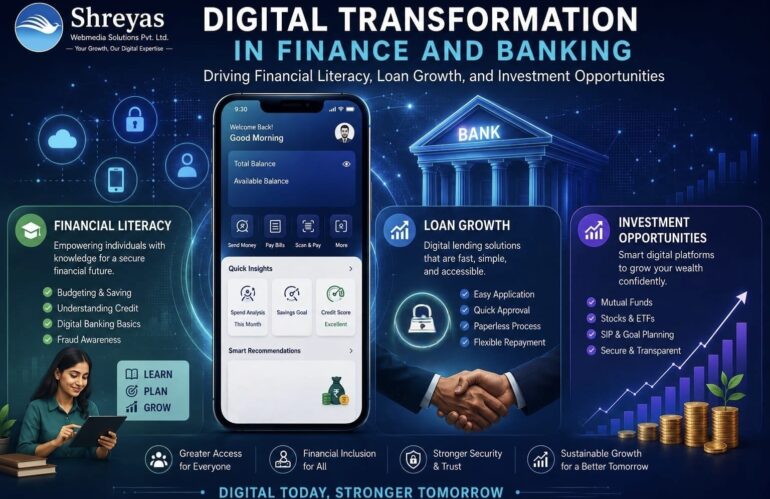
Digital transformation has reshaped the finance and banking sector, making financial services more accessible, efficient, and customer-centric. From mobile banking apps and AI-powered chatbots to digital lending platforms and investment advisory services, technology has revolutionized how consumers interact with financial institutions.
Beyond improving operational efficiency, digital transformation has become a powerful tool for financial literacy campaigns and lead generation for loans, insurance, and investment products. Banks, NBFCs, fintech companies, and wealth management firms are leveraging digital marketing, automation, and analytics to educate customers while expanding their customer base.
What Is Digital Transformation in Finance and Banking?
Digital transformation in finance refers to the integration of digital technologies into banking, lending, payments, insurance, and wealth management services. It focuses on delivering seamless customer experiences while reducing operational costs.
Major components include:
Mobile Banking
Customers can transfer funds, pay bills, apply for loans, and manage investments using smartphone applications.
Artificial Intelligence
AI assists customers through chatbots, automates customer support, detects fraud, and recommends personalized financial products.
Cloud Computing
Financial institutions use cloud platforms to improve scalability, security, and accessibility of services.
Data Analytics
Banks analyze customer behavior to personalize marketing campaigns and recommend suitable financial products.
Digital Payments
UPI, digital wallets, contactless payments, and QR-based transactions have transformed payment ecosystems worldwide.
The Growing Importance of Financial Literacy
Financial literacy is no longer optional. As financial products become increasingly sophisticated, customers need proper guidance before making borrowing or investment decisions.
Digital financial literacy campaigns help consumers understand:
- Personal budgeting
- Savings strategies
- Credit score management
- Loan eligibility
- Insurance planning
- Retirement planning
- Mutual funds
- Stock market basics
- Tax-saving investments
- Digital payment safety
Educated customers are more confident in using financial products, resulting in higher trust and stronger customer relationships.
Digital Channels for Financial Literacy Campaigns
Financial institutions now educate consumers through multiple digital platforms.
Educational Blogs
SEO-optimized articles answer common financial questions, attract organic traffic, and establish authority.
Popular topics include:
- How to improve your credit score
- Home loan eligibility
- Personal loan vs. credit card
- SIP investment guide
- Tax-saving investment options
- Safe digital banking practices
Social Media Campaigns
Short videos, infographics, polls, and financial tips on platforms like LinkedIn, Instagram, Facebook, and YouTube help simplify complex financial concepts.
Webinars and Online Workshops
Banks and fintech companies conduct virtual sessions covering investment planning, retirement strategies, tax planning, and digital banking security.
Email Marketing
Personalized newsletters provide investment insights, market updates, financial planning tips, and exclusive product offers based on customer interests.
Interactive Calculators
Loan EMI calculators, SIP calculators, retirement planning tools, and tax calculators encourage users to engage with financial websites while generating qualified leads.
Digital Marketing for Loan Lead Generation
Generating qualified loan leads has become one of the biggest applications of digital transformation in finance.
Banks use multiple digital channels to attract borrowers searching online for financial solutions.
Search Engine Optimization (SEO)
Optimized landing pages targeting keywords such as:
- Home loan interest rates
- Personal loan online
- Business loan eligibility
- Education loan
- Instant loan approval
help attract users actively searching for borrowing options.
Paid Advertising
Google Ads and social media advertising target users based on demographics, interests, and financial behavior.
Retargeting campaigns remind potential customers who previously visited loan pages but did not complete their applications.
Landing Page Optimization
Dedicated landing pages with clear eligibility criteria, benefits, calculators, and simple application forms significantly improve conversion rates.
Marketing Automation
Automated workflows nurture prospective borrowers through:
- Welcome emails
- Eligibility reminders
- Document submission notifications
- Personalized offers
- Follow-up communications
Automation improves response times while reducing manual effort.
Digital Transformation in Investment Lead Generation
Investment platforms increasingly rely on digital strategies to educate and convert investors.
Personalized Investment Recommendations
AI analyzes customer profiles and recommends suitable investment products based on:
- Income
- Age
- Risk tolerance
- Financial goals
- Investment horizon
This creates highly personalized customer experiences.
Content Marketing
Investment companies publish educational content covering:
- Mutual funds
- SIP investing
- Stock market basics
- Gold investments
- Bonds
- Exchange-traded funds (ETFs)
- Retirement planning
High-quality content builds credibility while generating qualified investment leads.
Video Marketing
Short educational videos explaining investment concepts attract younger audiences and improve customer engagement.
Webinars
Live expert sessions help build trust and encourage attendees to explore investment products after gaining valuable knowledge.
Role of Artificial Intelligence
Artificial intelligence has become a cornerstone of digital banking transformation.
AI supports:
- Fraud detection
- Customer service chatbots
- Credit risk assessment
- Personalized product recommendations
- Loan approval automation
- Predictive customer analytics
By reducing response times and improving customer experiences, AI increases customer satisfaction while lowering operational costs.
Data Analytics for Customer Acquisition
Banks collect valuable customer insights from digital interactions.
Analytics helps identify:
- Loan demand patterns
- Investment preferences
- Customer lifecycle stages
- Cross-selling opportunities
- Customer churn risks
These insights enable highly targeted marketing campaigns with improved conversion rates.
Cybersecurity and Customer Trust
As financial services become increasingly digital, protecting customer data is essential.
Financial institutions invest heavily in:
- Multi-factor authentication
- End-to-end encryption
- Biometric verification
- AI-powered fraud detection
- Secure payment gateways
Strong cybersecurity measures increase customer confidence and encourage greater adoption of digital banking services.
Benefits of Digital Transformation in Finance
Digital transformation delivers measurable benefits for both institutions and customers.
Key advantages include:
- Faster loan processing
- Improved customer experience
- Higher customer engagement
- Better financial literacy
- Personalized financial advice
- Increased operational efficiency
- Reduced acquisition costs
- Higher lead conversion rates
- Improved regulatory compliance
- Stronger customer loyalty
Future Trends
The next phase of digital finance will focus on intelligent automation and personalized financial experiences.
Emerging trends include:
- AI-powered financial advisors
- Embedded finance
- Open banking ecosystems
- Voice-enabled banking
- Blockchain-based financial services
- Hyper-personalized marketing
- Predictive lending models
- Real-time fraud prevention
- Digital identity verification
Financial institutions that combine education with technology-driven customer engagement will be better positioned to attract, convert, and retain customers.
Conclusion
Digital transformation is redefining finance and banking by making services more accessible, secure, and personalized. Financial literacy campaigns delivered through blogs, webinars, social media, and interactive tools empower consumers to make informed decisions while building trust in financial institutions.
At the same time, digital marketing, AI, automation, and data analytics enable banks and fintech companies to generate high-quality leads for loans and investment products more efficiently than ever before. As customer expectations continue to evolve, organizations that prioritize education, innovation, and digital experiences will gain a lasting competitive advantage in the rapidly changing financial landscape.