How Brands Are Turning Social Conversations Into Opportunities for Discovery, Trust and Growth
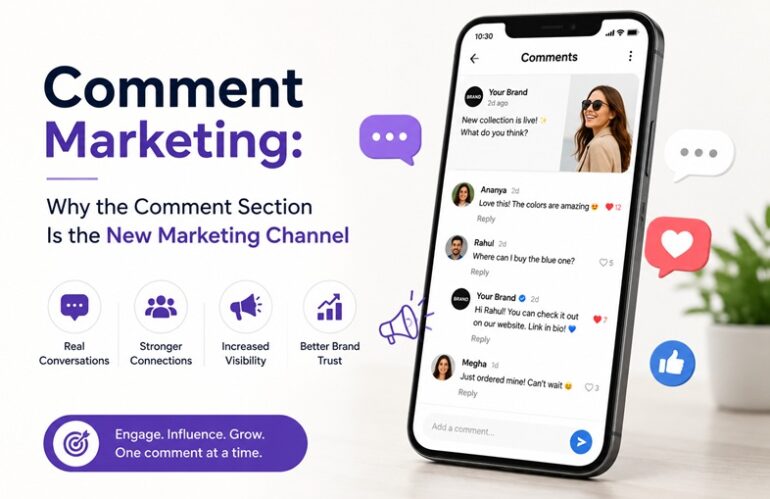
For years, social media marketing was built around the post. Brands planned content calendars, produced videos, designed graphics and invested in advertising to get their message in front of consumers. But some of the most valuable interactions are increasingly happening underneath that content. The comment section has evolved from a place for reactions into a space where people ask questions, seek recommendations, compare products and form opinions about brands. For marketers, this creates a new opportunity: comment marketing.
The Space Beneath the Post Is Becoming Valuable
A social media post may grab someone’s attention, but the conversation underneath it can influence what happens next. A potential customer might discover a product through a video and then scroll through the comments to see what other people are saying. They may want to know whether the product works, how much it costs, where it is available or whether someone else has had a good experience with it.
A thoughtful response from a brand can answer those questions at exactly the right moment. Unlike a traditional advertisement, it becomes part of an existing conversation rather than interrupting one.
People Want Brands to Talk, Not Just Sell
Consumers are surrounded by promotional messages. Another polished advertisement can easily disappear while scrolling, but a useful answer to a genuine question can stand out.
The 2025 Sprout Social Index, which surveyed more than 4,000 consumers along with social media practitioners and marketing leaders, highlights the growing importance of authentic and human-centred interactions between brands and audiences. The research points to a broader expectation that brands should create meaningful connections rather than simply publish promotional content.
That matters because trust is increasingly built through small interactions. A helpful response, an honest explanation or a thoughtful contribution can make a brand appear more accessible and credible.
Comments Are Becoming Discovery Channels
Social platforms are changing the way people discover information. Users are no longer relying only on traditional search engines to find products, services and recommendations. They are exploring videos, posts, communities and conversations.
This makes the comment section part of the discovery journey. Someone watching a restaurant review may read comments before deciding where to eat. A person considering a software product may look through discussions to understand its strengths and weaknesses. A traveller may find destination recommendations through a conversation beneath a short video.
For brands, being visible in these discussions can create another path to discovery.
What Comment Marketing Actually Means
Comment marketing is often misunderstood as simply commenting on other people’s posts to promote a business. That is not the strategy.
Effective comment marketing means finding relevant conversations and adding something useful to them. A digital marketing agency might explain a complicated SEO concept. A technology company could answer a question about cybersecurity. A travel business might share a practical tip about visiting a destination.
The brand does not always need to mention its product. The objective is to demonstrate knowledge and become a useful voice within the conversation.
LinkedIn, Instagram, YouTube and Reddit Offer Different Opportunities
Comment marketing does not work the same way on every platform.
On LinkedIn, comments can help professionals and company leaders demonstrate expertise around business and industry discussions. On Instagram, conversations around products, fashion, food, travel and lifestyle can influence purchasing decisions. YouTube comments often become extended discussions around reviews, tutorials and product demonstrations. On Reddit, where communities are built around specific interests, authenticity and relevance are particularly important.
The common factor is that audiences are already discussing subjects related to their interests. Brands that understand the culture of each platform can participate without making the interaction feel like an advertisement.
Founders and Employees Can Become Marketing Voices
The opportunity is not limited to corporate accounts. Founders, executives and employees can also become important voices in online conversations.
A founder commenting on an industry development can demonstrate expertise. An employee answering a technical question can make a company more approachable. A subject-matter expert participating in a discussion can build credibility for both the individual and the organisation.
This is particularly relevant as audiences increasingly respond to people rather than faceless corporate messaging. A brand can have a carefully designed identity, but the people representing it can make that identity feel real.
The Comment Section Is a Customer Research Tool
There is another marketing advantage hiding in plain sight: comments reveal what customers are thinking.
Questions can expose information gaps. Complaints can identify problems. Comparisons can reveal what consumers value. Repeated requests can point towards unmet demand.
Instead of treating comments simply as engagement numbers, marketing teams can analyse them for patterns. If hundreds of people are asking the same question, there is probably a content opportunity. If customers repeatedly complain about the same issue, there may be a product or service problem worth addressing.
The comment section can therefore function as an informal, always-on source of customer insight.
One Comment Can Become an Entire Content Strategy
A good marketing team can turn conversations into content.
A recurring question can become a blog article. A common misconception can become a short video. A frequently requested comparison can become a guide. A customer complaint can inspire an FAQ or product improvement.
This creates a useful feedback loop: customers ask questions, brands listen, content answers those questions, and the new content creates more conversations.
That is a much more audience-led approach to digital marketing than simply publishing whatever happens to be on the monthly content calendar.
AI Can Help Manage the Conversation
As brands grow, managing thousands of comments can become difficult. Artificial intelligence can help identify recurring topics, classify questions, flag potentially important conversations and help teams prioritise responses.
But automation comes with a warning. A generic AI-generated response may be technically correct but still feel disconnected from the conversation. A frustrated customer may need empathy. A complicated question may require expertise. A humorous conversation may call for a human response.
The best approach is likely to use AI to handle scale while allowing people to handle the moments where judgement and personality matter most.
The Biggest Mistake Is Turning Every Reply Into a Sales Pitch
Comment marketing can fail when brands try too hard to sell.
People generally understand when a company has entered a conversation solely to promote itself. Repeated product plugs can make a brand appear intrusive, while irrelevant comments can damage credibility.
The strongest comment marketing is often subtle. A brand may answer a question without mentioning its product. A founder may offer an industry insight without linking to a website. An employee may solve someone’s problem without asking for anything in return.
The commercial value comes from the relationship created through the interaction.
From Social Media Management to Community Marketing
This shift is changing the role of social media teams. Managing social media is no longer simply about scheduling posts, tracking likes and responding to direct messages. It increasingly involves listening to communities, understanding conversations and knowing where a brand can contribute something meaningful.
This is where community marketing becomes important. Brands that build communities rather than simply audiences have more opportunities to create ongoing relationships. The comment section is one of the simplest places where that relationship can begin.
The New Digital Marketing Advantage
Digital marketing has always been about finding new ways to earn attention. But as feeds become increasingly crowded and consumers become more selective about advertising, conversations can offer something different.
A useful comment can introduce a brand to a potential customer. A detailed response can demonstrate expertise. A customer question can inspire new content. A discussion can reveal market intelligence. And a genuine interaction can strengthen trust.
The next stage of social media marketing may therefore involve less broadcasting and more participation. Brands will still need strong content, advertising and SEO, but those activities will increasingly exist alongside something much more human: conversations.
The next customer may not discover a brand through an advertisement or even through the brand’s own social media page. They may discover it while reading a comment, following a discussion or looking for an answer.
The comment section is no longer simply the space beneath the marketing. It is becoming part of the marketing itself.