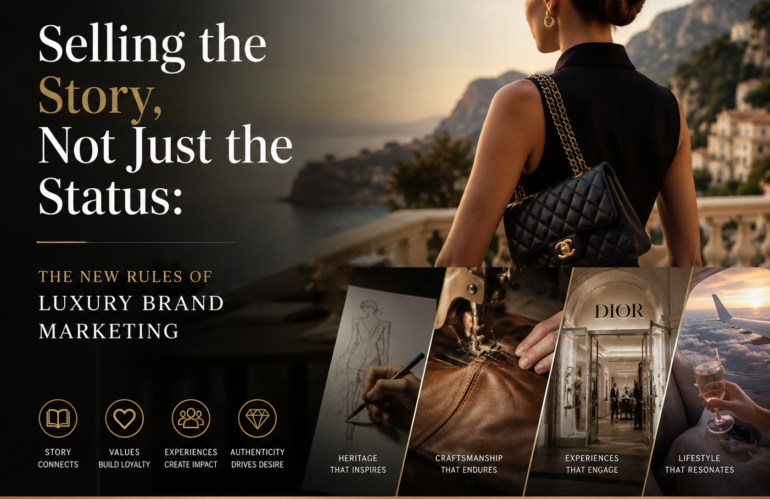
Sept 01: Luxury has never been just about owning something expensive. A watch can represent heritage. A piece of jewellery can carry a story of craftsmanship. A luxury hotel can sell a sense of place as much as a room. A fashion label can become part of how a customer sees themselves.
That is why the way luxury brands communicate is changing. In an increasingly digital marketplace, online media coverage for luxury brands is becoming less about simply getting a name published and more about shaping the story people discover when they encounter a brand.
For luxury businesses, visibility matters. But context matters more. A well-positioned feature, founder interview or brand story can give consumers a reason to remember a name long after an advertisement has disappeared from their screen.
The Story Behind the Luxury
A luxury product rarely speaks for itself.
Consumers want to know where it came from, who created it, what makes it different and why it deserves a place in their lives. This is where storytelling becomes one of the most valuable tools in luxury marketing.
A jewellery brand can talk about the artisans behind a collection. A premium fashion house can explore the inspiration behind a new line. A luxury resort can introduce guests to its design philosophy, local culture and approach to hospitality.
The world’s most recognised luxury houses have long understood this principle. Brands such as Hermès have built powerful identities around craftsmanship and heritage, while Rolex has consistently connected its products with precision, achievement and exploration.
Online media gives newer and established brands alike an opportunity to communicate these deeper stories in a format that feels more substantial than conventional advertising.
Exclusivity Is Changing
For years, luxury marketing often relied on one simple idea: if something is difficult to access, people want it more.
That idea still matters, but exclusivity is becoming more nuanced. Today’s luxury customer may value early access to a collection, a private shopping experience, personalised service or membership benefits just as much as owning something rare.
McKinsey’s State of Luxury: US and China Outlook, published in June 2026, surveyed more than 2,000 luxury clients across the US and China. Its research found that emotional connection is increasingly important to brand desirability, while recognition, access and personalised experiences are becoming important expressions of exclusivity.
For luxury marketers, that changes the conversation. Exclusivity is no longer simply about keeping people out. It is increasingly about making selected customers feel recognised and valued.
Why Online Media Matters
Social media can create instant attention, but online media can provide something different: context.
A brand feature can explain the thinking behind a collection. An interview can introduce the founder. A business story can highlight growth and innovation. A launch article can place a new product within a larger cultural or market trend.
This can contribute to brand authority and online reputation. When potential customers research a company online, credible media stories can reinforce the impression that the brand is established, relevant and worth exploring.
For newer luxury businesses, this can be particularly important. They may not have decades of heritage behind them, but strong storytelling can help establish a distinctive identity.
From Media Visibility to High-Value Customer Acquisition
Luxury has always understood the importance of selective targeting.
A premium brand does not necessarily need millions of people to see its message. It needs the right people to notice it.
That could mean an entrepreneur looking for a luxury residence, a collector searching for a rare watch, a traveller considering a high-end resort or a customer exploring bespoke jewellery.
This is where high-value customer acquisition becomes closely connected to content and digital PR. A relevant article appearing in the right online environment can reach audiences who already have an interest in premium products and experiences.
The objective is not simply traffic. It is meaningful discovery, consideration and trust.
A More Selective Luxury Consumer
The luxury market itself is becoming more challenging, making that targeted approach increasingly relevant.
Bain & Company and Altagamma’s 2025 Luxury Goods Worldwide Market Study estimated that the global luxury consumer base had declined from around 400 million people in 2022 to approximately 340 million in 2025. The study also reported a 5% decline in new customer acquisition between 2024 and 2025.
These figures point to a broader shift. Luxury brands can no longer assume that consumers will automatically remain loyal or that increasing exposure alone will solve the problem.
Brands have to give people a reason to care, remember and eventually choose them.
Founder Stories Are Becoming Brand Assets
The person behind a luxury business can be as interesting as the product itself.
Founder interviews and leadership profiles allow brands to talk about their journey, creative decisions, challenges and ambitions. They also give consumers something increasingly valuable: a human connection.
For an emerging luxury label, the founder’s story can become a form of heritage in the making.
Instead of simply saying that a brand is innovative, for example, a founder can explain what inspired a new approach to design. Instead of claiming craftsmanship, the brand can introduce the people and processes behind the finished product.
This approach can make a luxury story feel more authentic while giving journalists and audiences a stronger narrative to engage with.
Digital PR Is Changing the Way Luxury Brands Launch
A luxury launch is no longer limited to a press event or advertising campaign.
Brands can build anticipation through interviews and previews, create launch-day visibility through online coverage and then extend the conversation through stories about the collection, designers, customer experiences or industry trends.
Consider how a major fashion or watch launch can generate multiple layers of content: the announcement itself, a designer interview, the story behind the craftsmanship, coverage of the event and subsequent discussion among consumers and creators.
This gives a campaign a longer digital life.
For luxury brands, that matters because the purchase journey can be much longer than a simple click-and-buy transaction. Customers may discover a brand today, research it weeks later and eventually make a purchase after several interactions.
Media coverage can become one of those touchpoints.
Personalisation Is the New Luxury Language
Walk into a luxury store and the experience is often designed around attention.
A customer may receive personalised recommendations, private consultations or access to products that are not widely available. Increasingly, brands are carrying that philosophy into their digital communication.
McKinsey’s 2026 luxury research identified differences in what consumers value across markets. US consumers showed interest in early access, limited editions and membership-style benefits, while Chinese consumers placed greater emphasis on bespoke services, private shopping and trusted adviser relationships.
The lesson is straightforward: there is no single definition of luxury anymore. Personalisation has to reflect the customer.
Luxury Discovery Is Becoming Digital
The path to a luxury purchase is becoming increasingly fragmented.
Consumers may discover a brand through social media, read an online feature, watch a creator’s content, explore reviews, visit the company’s website and use AI tools to research their options.
McKinsey’s 2026 research highlights the growing role of AI platforms, creators, resale marketplaces and peer networks in luxury discovery and product research.
This makes a brand’s wider digital presence increasingly important.
A strong online media story may not produce an immediate sale, but it can help answer an important question when a customer starts researching: Is this a brand I should take seriously?
SEO Without Losing the Luxury Feel
Search visibility matters, but luxury brands have to approach SEO carefully.
Content built entirely around keywords can feel generic, promotional and out of character. Luxury requires a more considered approach.
Instead of repeatedly inserting phrases such as luxury brand storytelling, luxury marketing strategy, premium brand PR and luxury customer acquisition, brands can build these themes naturally into useful stories.
An article about the craftsmanship behind a collection can support search visibility while remaining editorial. A founder interview can strengthen brand authority. A feature on changing luxury travel trends can introduce a hospitality brand to potential customers without turning the article into an advertisement.
The best luxury SEO often does not feel like SEO at all.
Online Media and the Customer Research Journey
The role of online media becomes even more valuable when viewed through the customer journey.
A potential customer may first encounter a brand through an article. They may then search for the company, visit its website, explore its social channels and look for additional coverage before making a decision.
This means every credible media mention can become part of a wider digital reputation ecosystem.
For high-value purchases, where consumers may spend considerably more time researching before committing, that ecosystem can influence trust and consideration.
Media coverage therefore works alongside paid advertising, social media, search optimisation, influencer marketing and owned content rather than operating in isolation.
Building a Digital Reputation Takes Time
One article cannot create a luxury reputation overnight.
What matters is the accumulation of credible stories: a founder interview here, a product launch there, an industry feature, a business milestone and perhaps a thought-leadership piece that gives the brand a point of view.
Together, these stories begin to form a digital identity.
For a luxury brand, that identity can be particularly valuable because customers are buying into more than a product. They are buying into a world.
The Next Luxury Advantage: Being Remembered
The future of luxury marketing may not belong to the brands that generate the most noise. It may belong to the brands that create the strongest reasons to be remembered.
Research from McKinsey points towards a luxury environment where emotional connection, recognition, access and personalisation are increasingly important. At the same time, Bain & Company and Altagamma’s findings suggest that the luxury customer base is becoming more selective, putting greater pressure on brands to attract and retain valuable customers.
Online media coverage can help respond to both challenges.
A strong feature can tell the story. A founder interview can build familiarity. A launch story can create anticipation. Thought leadership can establish expertise. Together, these touchpoints can strengthen visibility, credibility and consideration.
For luxury brands, the goal is therefore not simply to appear online. It is to appear in the right conversation, in the right context and with a story worth remembering.
That is where online media moves beyond publicity — and becomes part of the luxury brand experience itself.